
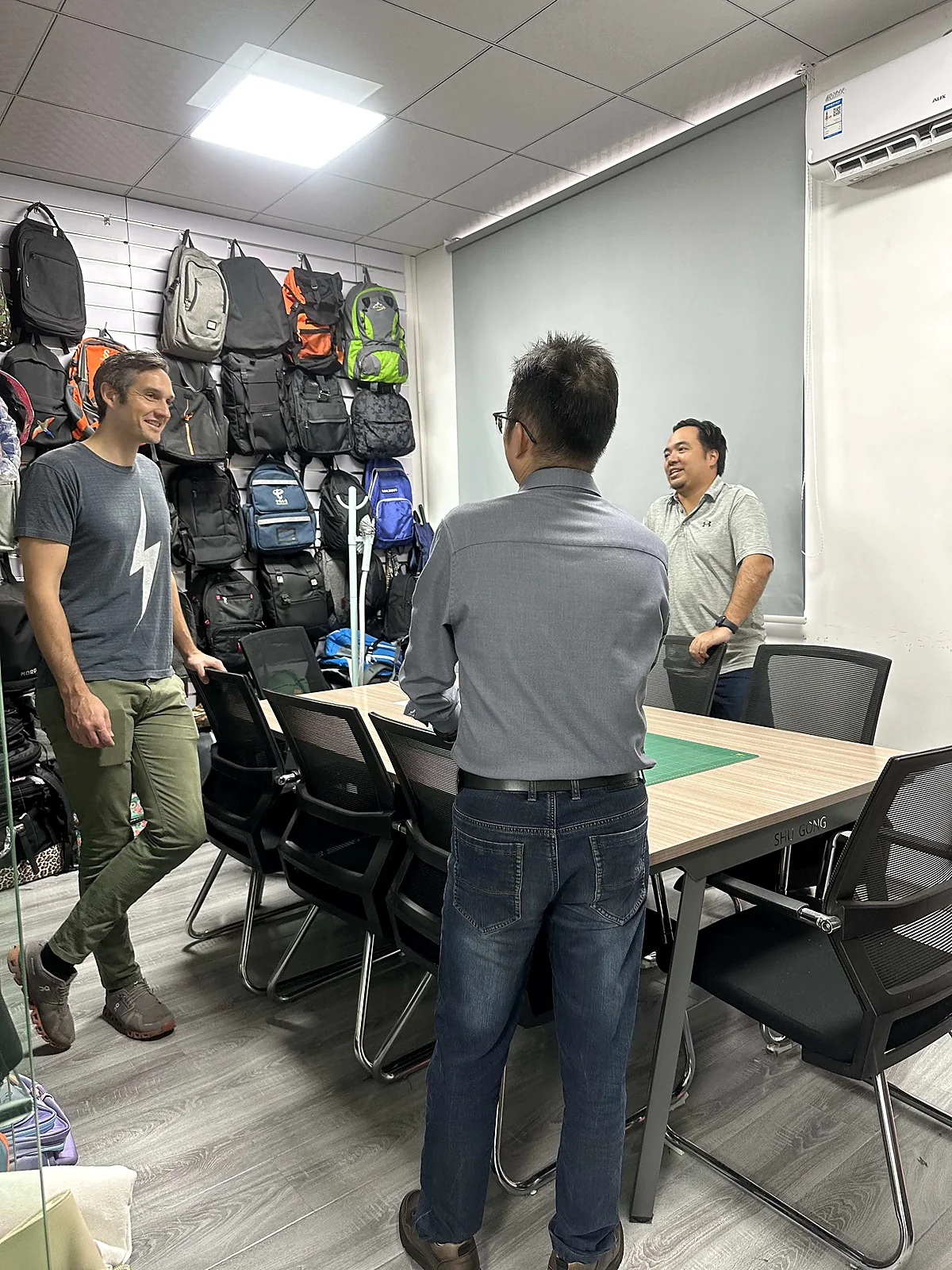

Sourcing custom bags from China can be smooth and cost-effective — or an expensive lesson — and the difference usually comes down to how well you vetted the supplier before wiring a deposit. Many “factories” you find online are actually trading companies, and even real factories vary hugely in capability and quality systems. This checklist gives you a repeatable way to separate a reliable manufacturing partner from a risky one.

Step 1: Factory or trading company?
The first thing to establish is whether you’re talking to the people who actually make the bags. Signals of a real factory:
- They can name their workshop size, number of sewing lines and monthly capacity.
- They’ll do a live video walk-through of the production floor on request.
- Their business license scope includes manufacturing, and the address matches an industrial location.
- Technical questions (stitch density, needle type, fabric denier) get specific answers, not deflection.
Trading companies aren’t automatically bad — some add real value in communication and QC — but you should know which you’re dealing with and price accordingly. Ask directly: “Are you the manufacturer, and can we video-tour the line?”
Step 2: Verify capability signals
A factory that genuinely makes outdoor bags should demonstrate:
- Relevant product experience — ask for samples or case references in your category, such as Custom Hiking Backpack Manufacturer or Custom Tactical Bags Manufacturer.
- In-house processes — cutting, sewing, QC, and ideally sampling under one roof. Ask what’s outsourced.
- Equipment fit — welding equipment for waterproof bags, bar-tacking machines for load-bearing straps, etc.
- Sampling ability — a factory with an in-house sample room iterates faster and communicates better.
Step 3: Check certifications and audits
Certifications don’t guarantee perfection, but their absence on a mid/large order is a warning.
- ISO 9001 — a documented quality-management system.
- SMETA / SEDEX — social-compliance auditing, increasingly required by retail and promotional buyers.
- BSCI — another widely accepted social-compliance standard.
- Product-specific docs — food-contact documentation may apply to Custom Cooler Bags Manufacturer projects, while REACH/CPSIA requirements depend on the regulated market.
Always ask to see the certificate itself, check the issuing body and expiry date, and confirm the certified entity’s name matches the company you’re paying.
Step 4: Assess the quality-control system
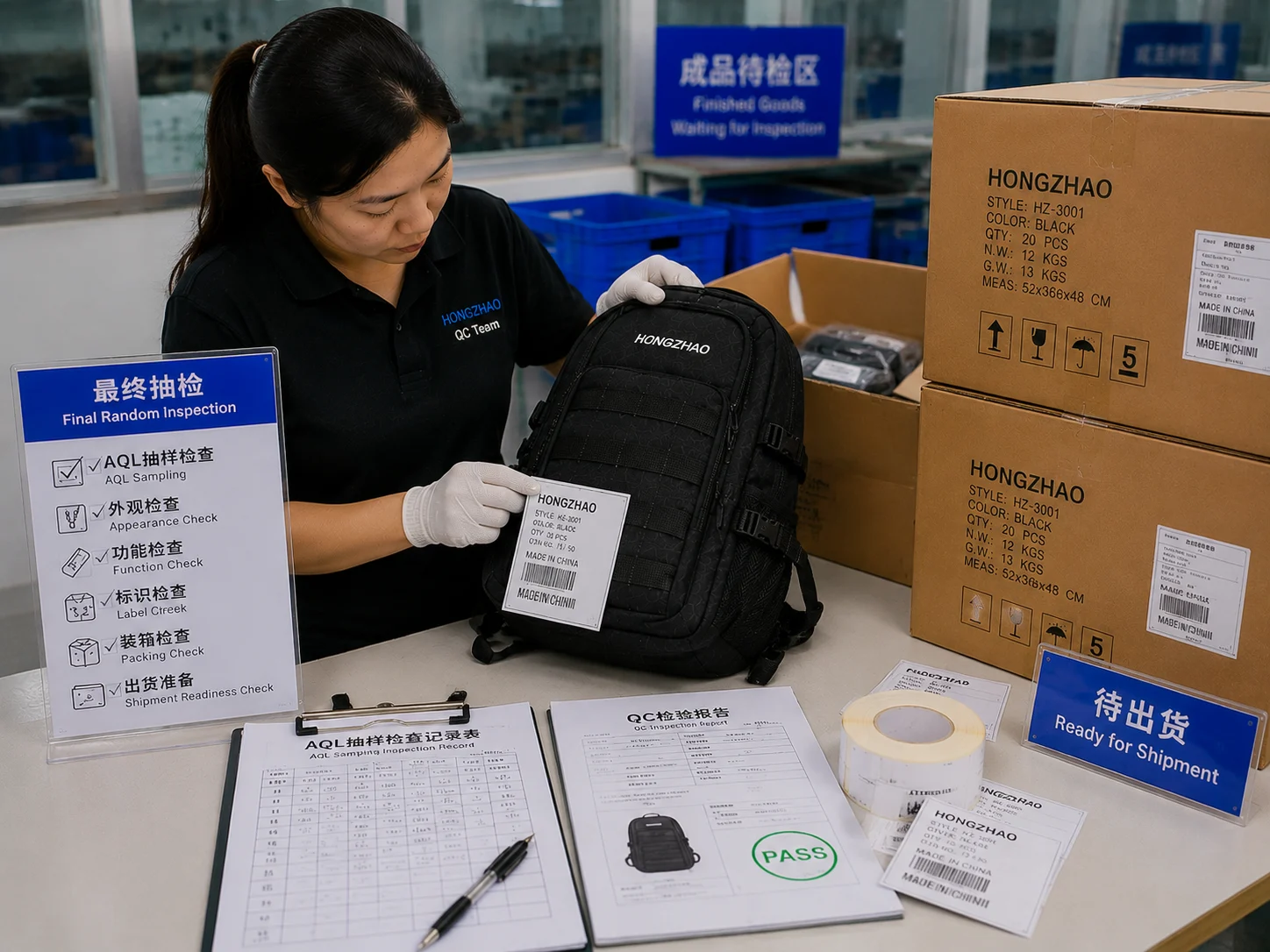
Ask the factory to describe its QC process. A strong answer covers multiple checkpoints, not just a final glance:
- Incoming material inspection — fabric, foam, zippers checked before cutting.
- In-line / cutting & sewing control — catching defects during production, not after.
- In-process checks — periodic pulls off the line.
- Final random inspection — often to an AQL standard (e.g. AQL 2.5) before packing.
Also ask about their defect / warranty policy. A confident factory will stand behind non-damage defects for a defined period.
Step 5: Test with a paid sample and small trial order
Documents tell you what a factory claims; a sample tells you what it does.
- Order a paid custom sample to your spec and evaluate stitching, symmetry, hardware and finish.
- For a new relationship, consider a smaller first order before scaling.
- Insist on a pre-production sample made with bulk materials — this is your quality benchmark.
Step 6: Verify the business and payment safely
- Match the company name on the quotation, license, and bank account — they should all be the same legal entity. Mismatches (especially a personal bank account) are a serious red flag.
- Use traceable payment terms (e.g. 30% deposit / 70% before shipment) rather than paying 100% upfront.
- Keep communication and agreements in writing.
Red flags summary
- Won’t do a live video factory tour.
- Can’t answer specific technical questions.
- No verifiable certifications for an order size that warrants them.
- Payment requested to a personal account or a company name that doesn’t match the license.
- Prices dramatically below every other quote.
- No pre-production sample offered.
A quick verification checklist
- Confirm factory vs trading company (video tour)
- Category-relevant experience and samples
- In-house processes and equipment fit
- ISO 9001 + social-compliance audit (SMETA/BSCI)
- Market-specific product certifications
- Multi-checkpoint QC + AQL final inspection
- Paid sample → pre-production sample → trial order
- Matching legal entity across license, quote and bank
- Sensible payment terms
How do I know if a China supplier is a real factory?
Ask for a live video walk-through of the production line, their workshop size and monthly capacity, and check that the business license scope covers manufacturing.
Which certifications should an outdoor bag factory have?
ISO 9001 for quality management and a social-compliance audit such as SMETA or BSCI, plus product-specific documents (food-contact, REACH/CPSIA) for regulated markets.
Is it safe to pay 100% upfront?
No. Use staged terms like 30% deposit and 70% before shipment, and pay a company account matching the legal entity on your quotation.
Do I really need a pre-production sample?
Yes. A PP sample made with bulk materials is your quality benchmark and the best protection against bulk drifting from what you approved.
Internal links: About Hongzhao , OEM Services , Custom Outdoor Bag MOQ, Sampling & Lead Time Guide
Want to vet us the same way? Request a live factory tour and our certifications.
Further Reading
Related Products