

A buyer's quick answer: Approve a custom soft cooler bag sample against the job it must do, not against a photograph or an attractive material list. First, load it with the actual product or a dimensionally equivalent substitute and record both the arrangement and the loaded weight. Second, carry that load using the intended handle and strap while checking the attachment points. Third, run a water-containment trial under a written method and describe only what that trial actually showed. Record open questions, revisions and the exact sample version before anyone calls it approved.
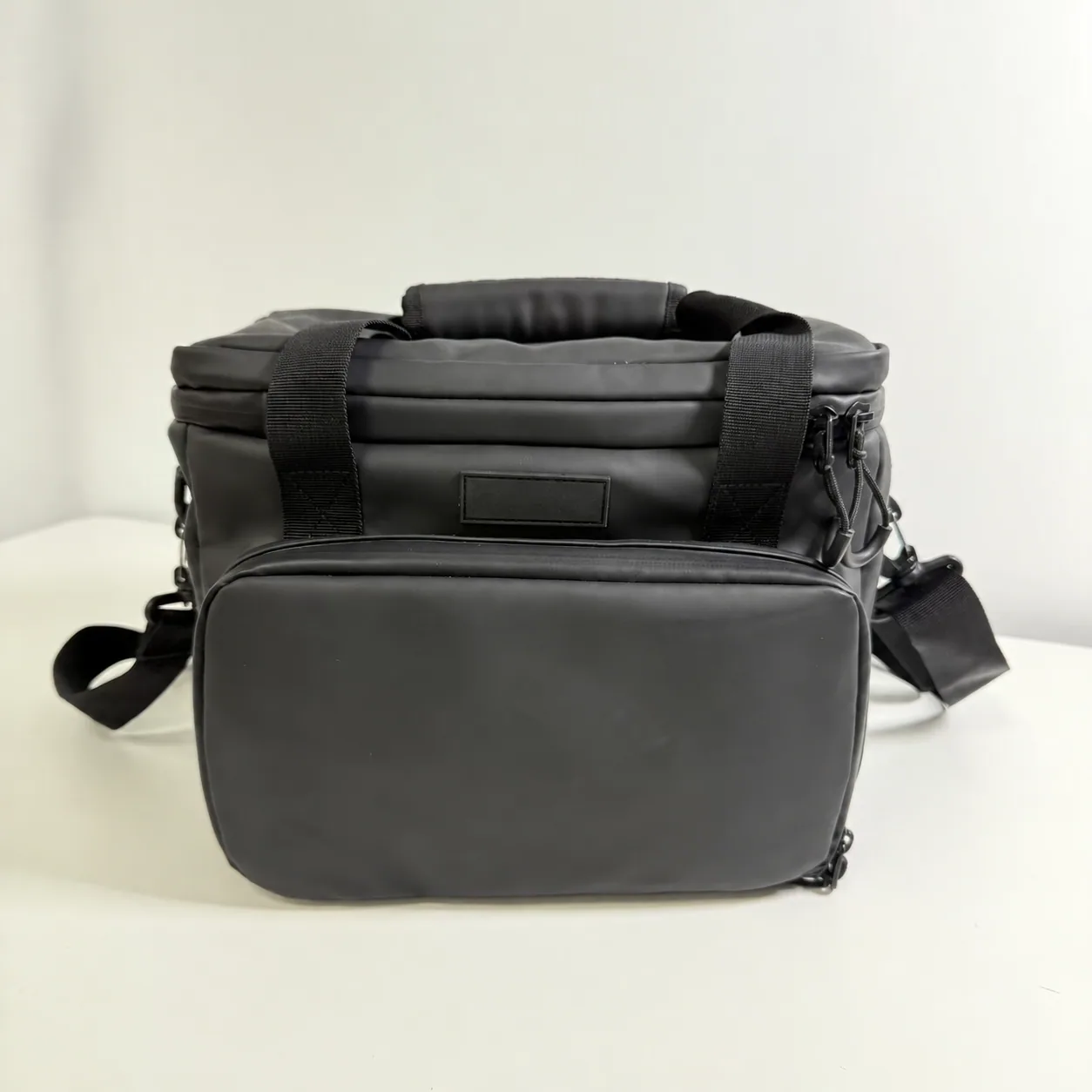
The opening image shows the reviewed sample with the customer's logo removed; the scale, carry and water-check photos below are the case evidence. This guide follows a Hongzhao large sample made for a U.S. customer and reviewed with 14 bottled waters. The bag and bottles together weighed about 14.1 lb (6.380 kg) on the scale. A short shoulder-carry check was reported as workable. Water left inside the upright sample for roughly ten minutes produced no visible seepage at the bottom during the reported observation. These are useful, bounded observations. They are not a rated load, a leakproof certification, a cold-retention result or a promise that every bag made from similar materials will behave identically.
Start with the buyer's use case
Two buyers can order visually similar soft coolers and need opposite results. One brand may pack upright bottles for a short trip from a vehicle to an event. Another may carry loose ice over uneven ground. A third may use sealed food containers, with no free water expected inside. Their capacity, carrying and water requirements are not interchangeable. Before evaluating a sample, write down the actual contents, loading pattern, travel time and likely handling. If the use case changes, the approval method changes with it.
Begin with a one-page use brief. List the content dimensions and quantities, whether contents must remain upright, whether a cold pack is part of the load, the preferred opening direction and how often users will open the bag. Specify who will carry it and by which attachment: two short handles, a shoulder strap or both. Ask whether the cooler will be placed on wet ground, left in rain or expected to contain loose meltwater. These are separate conditions. A trial with water standing inside the liner cannot answer whether rain can enter through the zipper.
Define which observations would make the sample unacceptable before seeing the result. Examples include a zipper that cannot close around the real pack-out, a strap clip that bears against the bag edge, or visible seepage under an agreed static water test. Do not borrow a generic pass threshold from another project. A threshold is meaningful only when the buyer has specified the method, exposure and consequence of failure. If no limit has been agreed, write “acceptance criterion to agree,” not “passed.”
It helps to distinguish three objects in the record: the design requirement, the physical sample, and the production specification. The sample can meet a requirement yet still be impossible to reproduce consistently if the liner, seam path or strap reinforcement is unspecified. Conversely, a neat specification is not proof that the physical sample is comfortable or contains water. Approval has to bridge all three. That is where a factory and buyer can save themselves a costly revision after the bulk order starts.
For this case, the buyer-facing evidence is a loaded scale photo, a short carry photo, images from a water trial and an underside check. The records are enough to build a useful example of how to review a sample. They are not a substitute for every acceptance test a buyer might require. The terms “test” and “check” in this article describe an in-house sample review, not third-party certification.
Check usable capacity, not a nominal size
“Holds 14 bottles” sounds precise until someone asks which bottles. Short, wide bottles and tall, narrow bottles make different demands on the base footprint and zipper line. A bag can accept the intended number with its lid open but fail once the zipper must clear bottle caps, a cold pack and the top seam. For a branded program, usable capacity means the contents fit in the required orientation with the closure and carrying method working as intended.
In the photographed review, 14 red-capped bottles were placed inside this soft cooler, and the bag-on-scale reading was about 14.1 lb (6.380 kg as displayed). The image supports that particular pack-out and loaded reading. It does not establish internal volume because the bottle dimensions, empty bag weight and any voids were not measured in the supplied record. Nor does it establish a universal 14-bottle rating: another bottle shape, lid treatment or cold-pack placement may alter the fit. The 14.1-lb figure is a combined reading; without an empty-bag reading, it cannot be presented as the net payload.
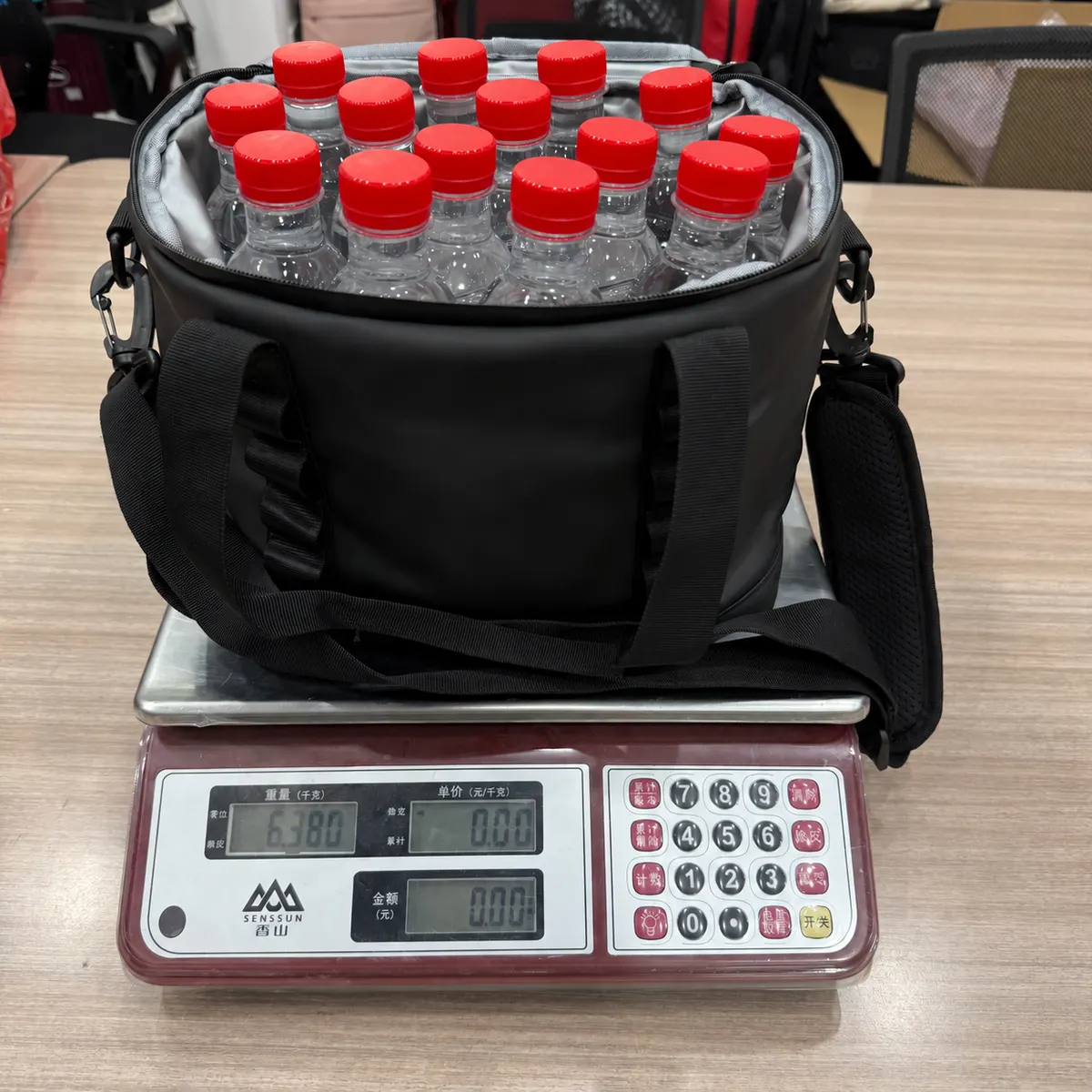
When reviewing your own sample, use the product that will actually be sold with it whenever possible. If that is confidential or unavailable, record the substitute item's dimensions and explain why it is representative. Photograph the empty interior, the first layer of contents, the full pack-out and the closed bag. Measure internal width, depth and usable height at the points that matter, not only the largest exterior dimensions. Soft walls flex; corner radii and seam allowances reduce usable space. Also check whether a bottle can be removed without disturbing the whole arrangement.
Make the capacity review repeatable. Record how many items were loaded, whether a cold pack was present, which side faced up, how the zipper was operated and whether the bag was on a flat surface. If the buyer needs a printed capacity claim, repeat the exercise on the final construction and agree what exactly that claim means. A good question is not merely “How many fit?” but “Does the configuration still let the user close, lift and retrieve items without forcing the structure?”
Access can be a hidden failure. A wide opening may appear generous in a top-down photo, while a tightened zipper path narrows the practical mouth. Try the proposed loading and retrieval sequence with the bag standing on the surface on which it will normally be used. Check whether the lid folds back without snagging a strap, whether the liner catches the zipper and whether condensation or small spills will collect where the user cannot wipe them. These are observable design details, not claims about thermal performance.
For a product range, test more than one pack-out. A retailer may need upright drink bottles, lunch containers and ice packs; an outdoor brand may prioritize a few large containers and easy access while walking. One physical sample can inform several configurations, but each configuration needs its own note. If the sample only passes when contents are arranged in an unnatural way, that is a design finding, not a marketing opportunity.
Review carry and attachment points with the intended load
Capacity and carry are linked. A cooler that fits the contents but becomes awkward when loaded has not solved the buyer's problem. In this case, the user reported that normal shoulder carry of the loaded sample felt workable during a brief manual trial. The photo shows a person wearing the strap, but it does not show duration, distance, repeated cycles or a controlled load protocol. Treat the observation as a prompt for a more specific buyer review, not as a certified weight capacity.
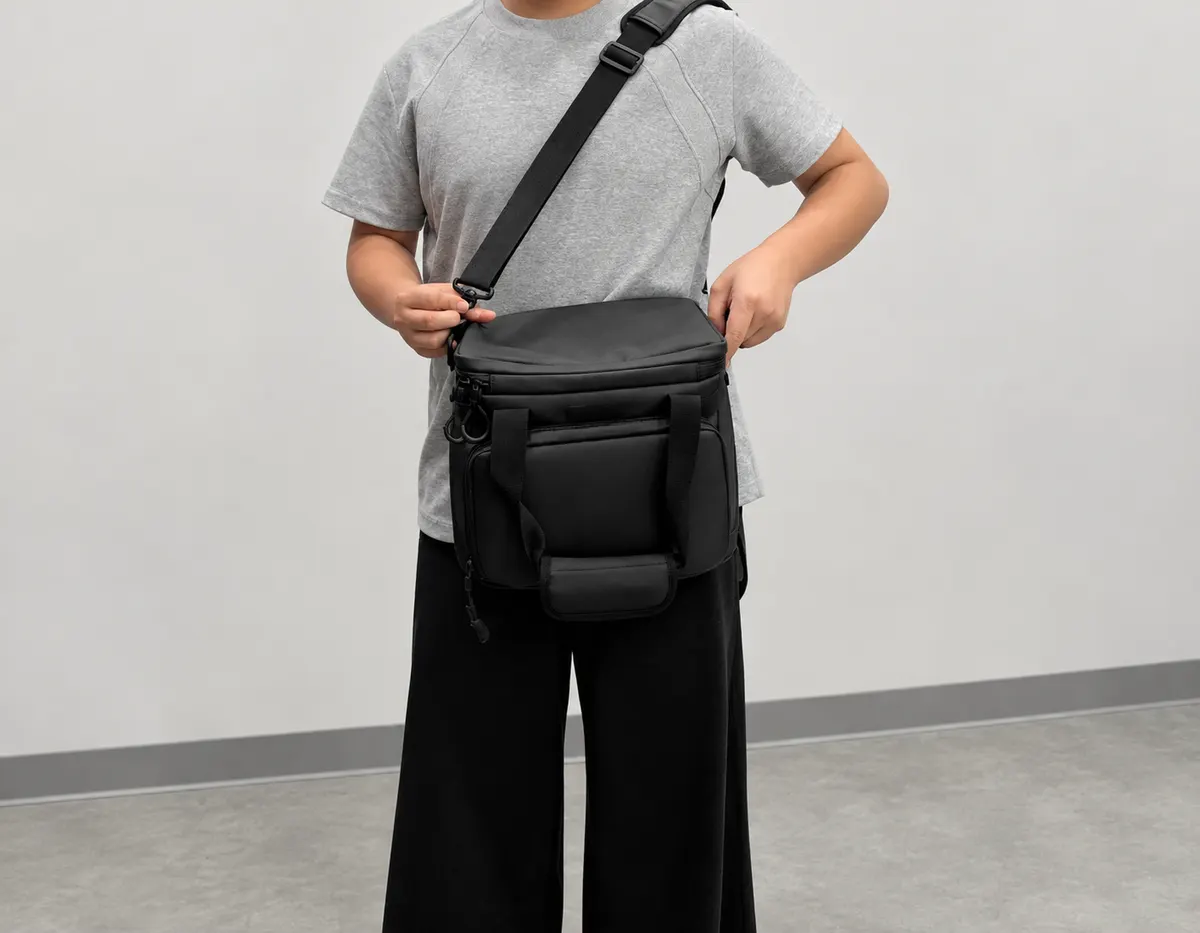
Ask how the bag is normally moved. If the user carries it from a parked vehicle to a picnic table, a short shoulder strap and two grab handles may be enough. If they walk farther or need both hands free, strap length, pad position and the bag's movement against the body become more important. A tall pack-out may shift the center of mass upward. The person reviewing the sample should try the intended contents, not an empty shell, and note whether the bag tips, bumps against the hip or twists when lifted.
Inspect the load path while the bag is full. Look at the webbing attachment, stitch area, reinforcement patch if present, buckle or clip engagement, and the way the strap meets the side panel. Does the seam visibly distort? Does hardware press into the shell or interfere with the zipper? Can the short handles be used without the strap dragging on the ground? These questions identify where a design revision may be needed. They do not by themselves prove strength. A formal durability claim would require an agreed load, repetitions, environment, acceptance criterion and recorded results.
Let more than one intended user handle a fit sample if the product will serve a broad audience. Record the strap adjustment range that was actually tried, not a guessed “one size fits all.” If a buyer plans to advertise a maximum carrying load, determine how that claim will be established and documented before printing it. The photographed 14.1-lb combined reading does not set that maximum. The safer, more useful record is that this particular sample was loaded in a known way and carried briefly without an issue reported by the user.
Finally, check the bag after the trial. Set it down, open it again and inspect the attachment area, hardware position and closure. Some problems appear only after handling: a twisted strap, a clip that rotated out of position or a lid that no longer sits cleanly. Photograph any issue from the same angle before and after a revision, so the next sample review can tell whether the change solved it.
Define the water-containment trial before interpreting it
“Waterproof” is a tempting shortcut in cooler-bag discussions, but it hides several different questions. Can standing water inside the liner reach the exterior bottom? Can rain enter from outside through the zipper? Can a filled bag be tipped or compressed without leakage? Does a seam stay intact after repeated flexing? Each requires a different method. A short upright standing-water observation only addresses the first question, under the conditions used. It cannot be promoted into an all-purpose leakproof or waterproof rating.
The supplied case record shows a water check beginning at approximately 2:11 p.m. (14:11 on the phone) and another observation at approximately 2:21 p.m. (14:21). The user reports that after about one minute and again at the end of roughly ten minutes, no water was seen seeping through the bottom; the water was then poured out and the underside inspected. This is a useful in-house observation about this sample under this short static trial. The supplied information does not specify the poured volume, water depth, whether the bag was compressed or moved, or how the bottom surface was prepared. Those omissions limit the conclusion.
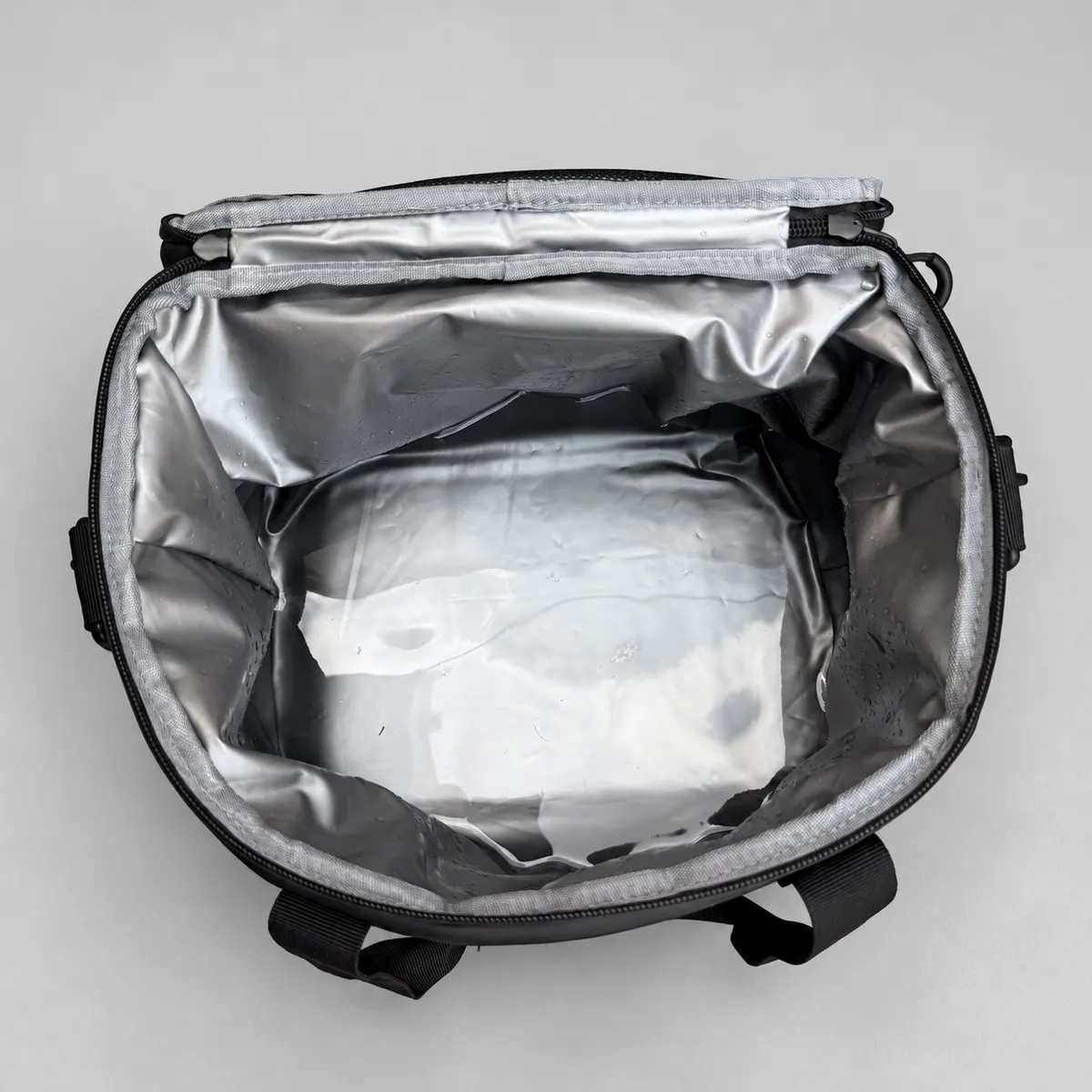
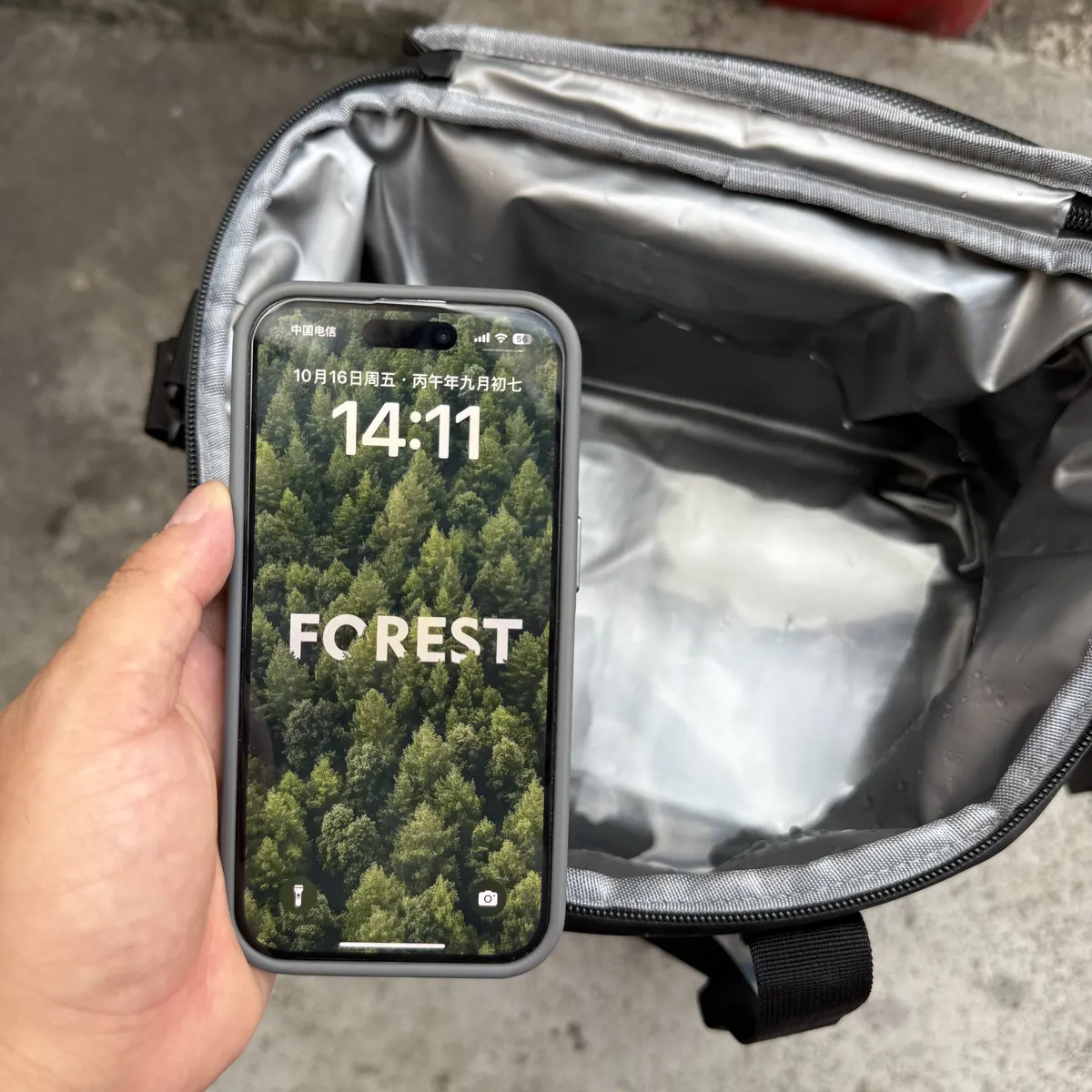
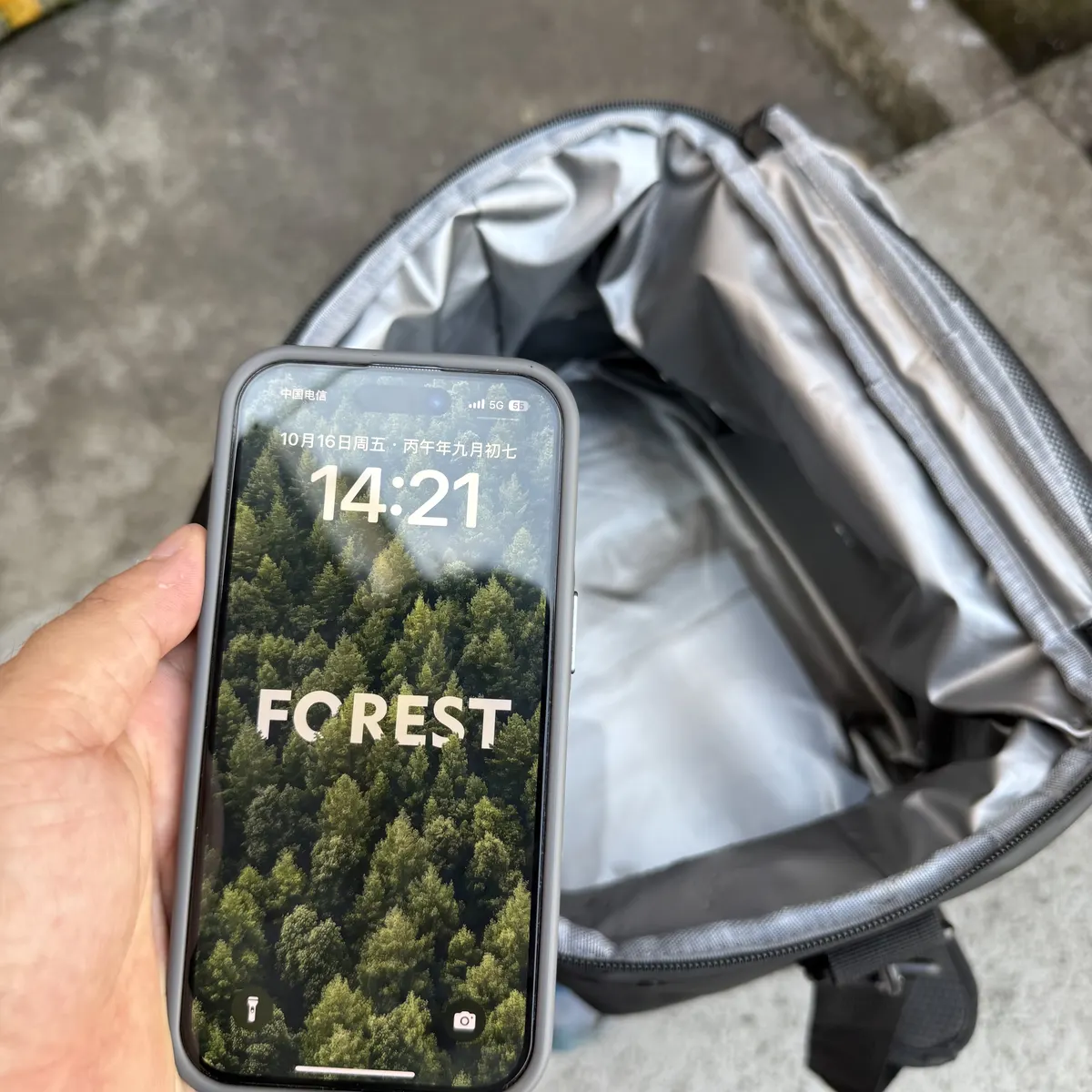
If a buyer wants to repeat this check, agree a written method first. Record the sample ID, liner version, water amount, approximate water level, test duration, bag orientation, supporting surface and inspection points. Decide whether the exterior is dried before the test and how a wet mark will be recognized. Take a start photo, intermediate observation and end photo from repeatable angles. After emptying, check the underside, lower seam path, corners and any point where a strap or base panel joins the body. Note whether the water contacted those areas. If the sample has a removable insert or a separate liner, identify which component was actually tested.
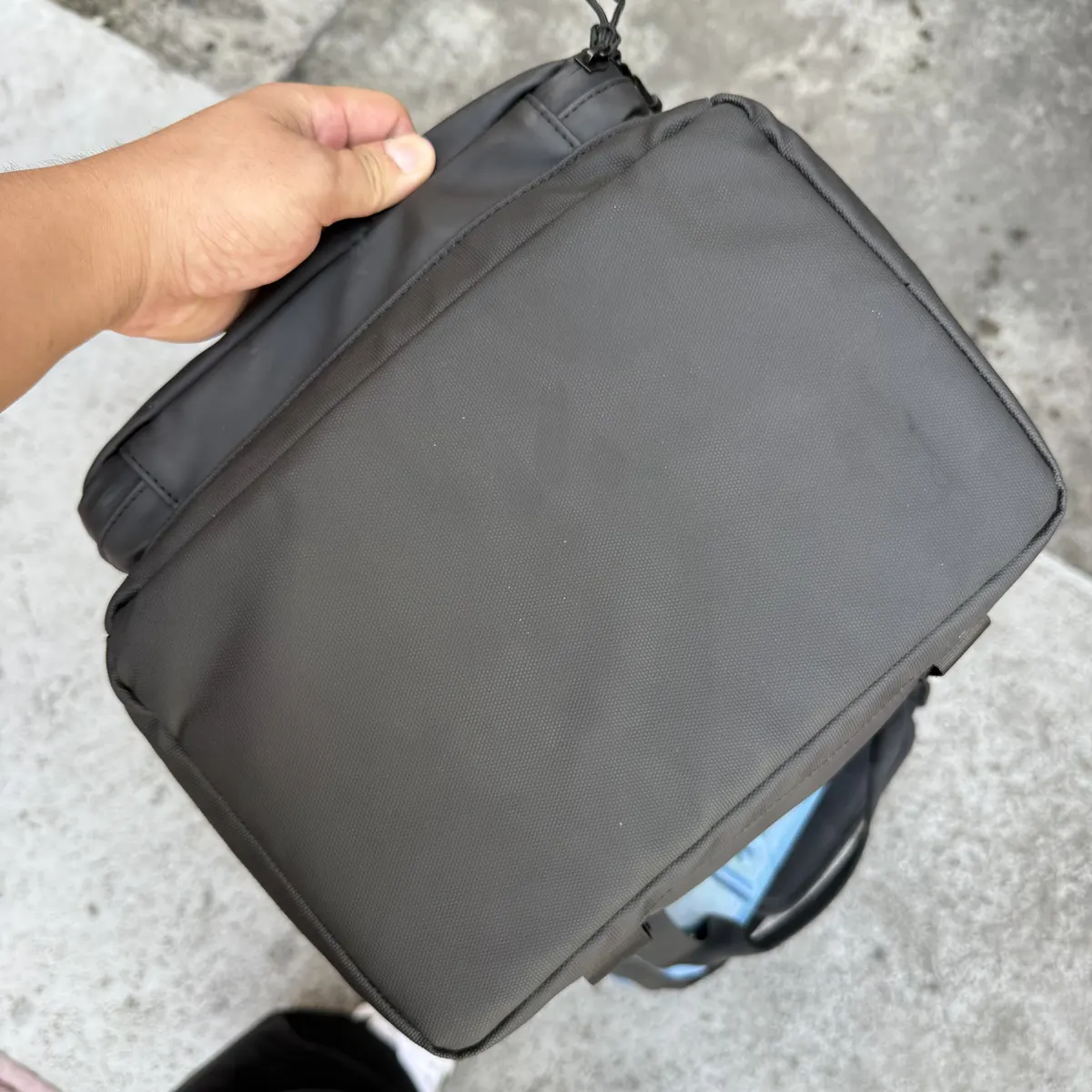
For the Hongzhao case, the appropriate sentence is: “No visible bottom seepage was reported after water stood inside this upright sample for approximately ten minutes.” The inappropriate sentence is: “This cooler bag is waterproof and leakproof.” The latter would imply performance during rain, motion, inversion, wear and possibly repeated manufacturing, none of which was established here. If the buyer expects loose ice or meltwater in actual use, they should define that use case and a stronger acceptance method rather than relying on this single observation.
It also matters where water can travel. A liner may appear to contain water when upright while a zipper, stitched opening or attachment penetration provides another path during handling. Conversely, exterior coating can shed a splash without the interior liner being able to contain water. Keep those claims separate in the brief. A buyer may decide that wipe-clean convenience is sufficient for sealed containers, while another needs a tested containment requirement. Hongzhao can discuss construction choices, but the agreed project method and result must govern the promise.
Do not infer food-contact suitability from a silver or PEVA-looking surface. The destination market, exact material and current supporting documentation need separate review. Do not infer cold-retention hours from this water trial either: no temperature, ice mass, ambient conditions or observation interval for a thermal test were supplied. The existing Cooler Bag Materials & Insulation: A Sourcing Guide for Buyers explains material options; the present guide is about approving the assembled sample against a buyer-defined use.
Freeze the construction you actually approved
A visually approved sample can drift during sourcing if the specification records only “polyester outer” and “PEVA liner.” Those labels do not describe coating, thickness, joining, reinforcement or how the layers meet at corners. This U.S. customer's large sample uses a PEVA inner lining, film-coated polyester exterior and EPE foam in the central bottom area, as confirmed by the owner against its production order/BOM. A repeat order still needs its own approved sample and material specification. This case description is not a factory-wide specification.
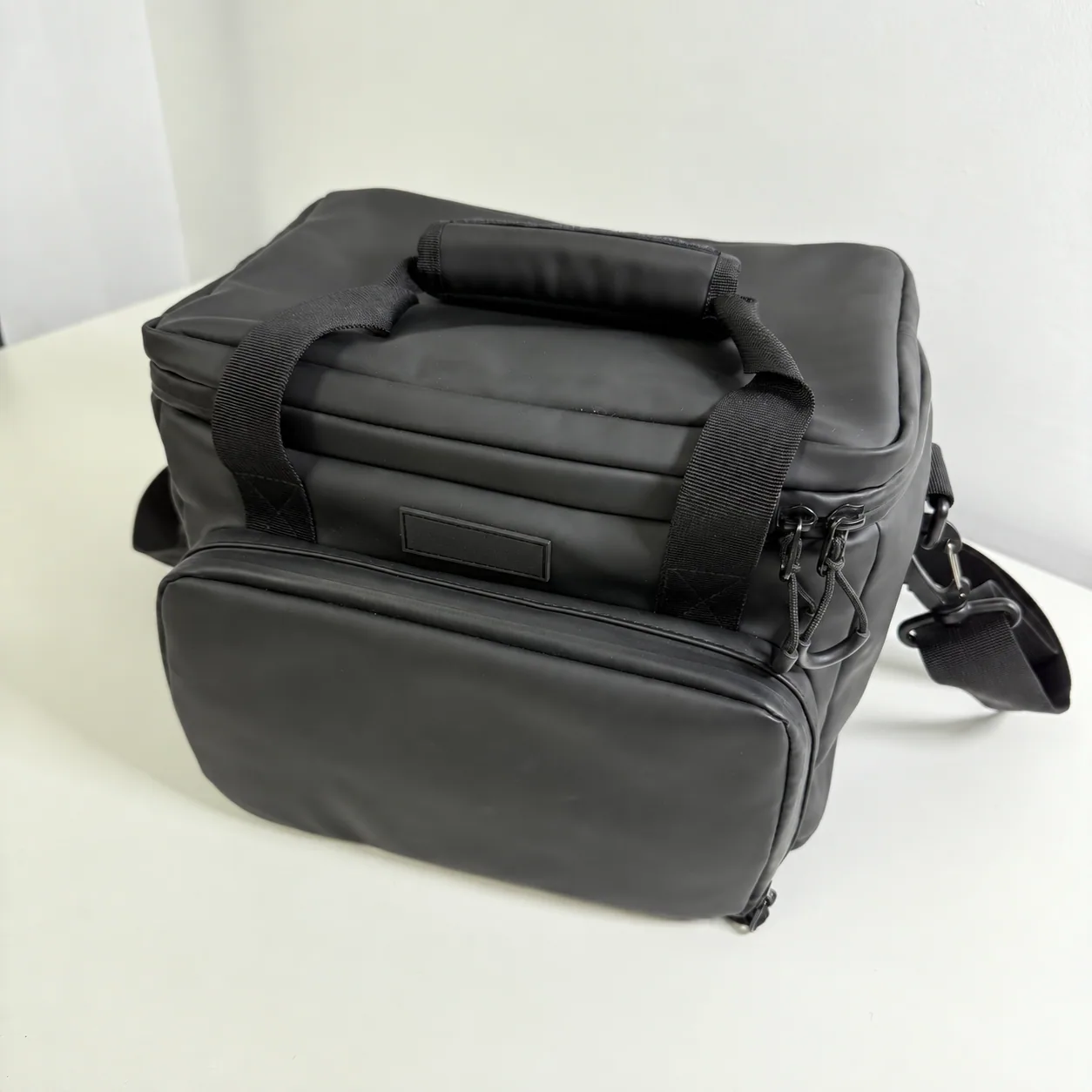
The buyer's practical task is to identify the features that affected the tests. What was the liner shape? Which seams meet the bottom? Is the foam distributed across the sides, only the base center or elsewhere? What is the zipper route over the fully loaded contents? Which pieces of webbing transfer load into the body? You do not have to prescribe one universal construction. You do need to make the selected construction identifiable, so that a revised or bulk-production bag can be compared with the approved sample.
Use a versioned sample record. Include dated photos of the front, back, open interior, bottom, strap attachment, zipper path and any revised detail. Attach measurements and the actual pack-out. Note the sample's material names only to the level the supplier can document. If a buyer changes the liner or foam after the water and carry review, mark the earlier observations as belonging to the earlier version; do not silently transfer them to the new one.
This is also where price discussions become more productive. A lower quote may assume a different liner, less reinforcement or another foam arrangement. Comparing two prices without comparing their approved constructions can create a false saving. Buyers can send the same brief and acceptance record to each supplier, then ask what construction each quote actually includes. Hongzhao's Custom Cooler Bags Manufacturer page covers available OEM/ODM directions and the project inquiry path; this article stays with the sample approval decision.
For any claim that will appear on retail packaging, decide what evidence belongs in the approval file. “Easy to wipe clean” may be a use observation. A specific cold-retention duration, a load rating, a food-contact claim and “leakproof” are stronger representations that need the appropriate project-specific method and documentation. Do not let marketing language outrun the observed sample. One unqualified adjective can make a careful test record less credible.
Make the approval decision auditable
An approval meeting should end with more than “Looks good.” Use a table that keeps buyer requirements separate from observed facts. The observations below are limited to this sample; blank acceptance criteria must be agreed by the buyer, and the final disposition remains open until the relevant decision-maker signs the specific version. This is not a certificate or a production inspection report.
| Decision item | Method and case observation | Acceptance criterion | Current disposition / next evidence |
|---|---|---|---|
| Capacity and access | 14 photographed water bottles packed in the sample; combined bag-and-contents scale reading about 14.1 lb (6.380 kg) | Buyer to specify bottle dimensions, cold-pack allowance, closure and retrieval requirement | Fit shown for this pack-out; closed-zipper use and empty-bag weight need confirmation |
| Shoulder carry | User reports a brief normal shoulder carry felt workable with the loaded sample | Buyer to define wearer, route, duration and any required formal load test | Manual observation only; no certified working-load result |
| Short internal water containment | User reports no visible bottom seepage at about one minute and about ten minutes; phone photos show 2:11 and 2:21 p.m. | Buyer to agree water amount/depth, orientation, inspection method and failure threshold | Bounded observation; water amount/depth unknown, no leakproof rating |
| Construction identity | PEVA liner, film-coated polyester exterior and EPE in the bottom-center area confirmed by the owner against this sample's production order/BOM | Match any repeat order to its approved BOM, pattern, seam and reinforcement details | Material names and placement confirmed for this sample; grades, thicknesses and seam details are not reported here |
| Bulk reproducibility | No bulk-production comparison supplied for this case | Buyer and factory to agree golden sample and production check points | Open; cannot be inferred from this sample review |
Before sign-off, add the sample identifier, date, reviewer and revision number. A “pass” can be narrow: the bottle arrangement may be accepted while the strap length remains for revision. A “retest” is not a failure of the whole project; it is a clear request for evidence after a design change. A “conditional approval” needs its conditions recorded and resolved before the approved sample is used as the bulk reference. Without that discipline, one side may treat a provisional comment as final authorization.
Bring the actual sample into the decision. Photos are useful for remote discussion but can hide stiffness, zipper drag, strap twist and corner pooling. If the decision must be made remotely, ask for repeatable video and measurements, and name who will hold the physical reference. The goal is not to make approval bureaucratic. It is to prevent a future argument about which version, use case or statement was approved.
Carry the decision from sample to production
Once a buyer approves a version, the next risk is substitution by assumption. A bulk bag may look like the sample in a hero photo while differing in foam placement, liner joining, zipper hardware or strap attachment. Create a golden-sample record that connects the signed physical item to its versioned drawing, material list, measurement points and approved images. Keep the actual reference accessible to the people checking material intake, sewing, assembly and final inspection.
Choose production checkpoints from the requirements that mattered in the sample review. If capacity is critical, compare the dimensions and opening against the approved pack-out. If carry is critical, inspect the webbing path, stitching and hardware configuration against the reference. If the buyer requires water containment, define how often and by what method production units or samples are checked. Hongzhao's Quality Control That Reduces Bulk Production Risk describes the wider inspection framework. This article does not assert that the photographed sample has undergone those production checks. It explains how a buyer can connect an approved prototype with a future order.
Log revisions explicitly. Changing the pocket shape may not affect the liner; changing a bottom seam, liner material or zipper position might. Decide which changes require a new water or carry review instead of assuming every previous observation remains valid. This is especially important when an attractive late-stage change is proposed after the sample has already been discussed. A version log protects both the brand and the manufacturer from approving two different things under one informal name.
Ask the factory to report exceptions, not simply send a reassuring photograph. A useful exception note names the part, the approved reference, the observed difference, its likely effect and the proposed next action. The buyer can then approve, reject or request a new sample with a reason. For a cooler, small construction changes can alter practical access or the route water takes. The OEM Outdoor Bag Manufacturing Services page explains where sample revisions sit in the broader OEM process. Documenting the decision is part of product quality, not paperwork for its own sake.
Three buyer scenarios that call for different sample checks
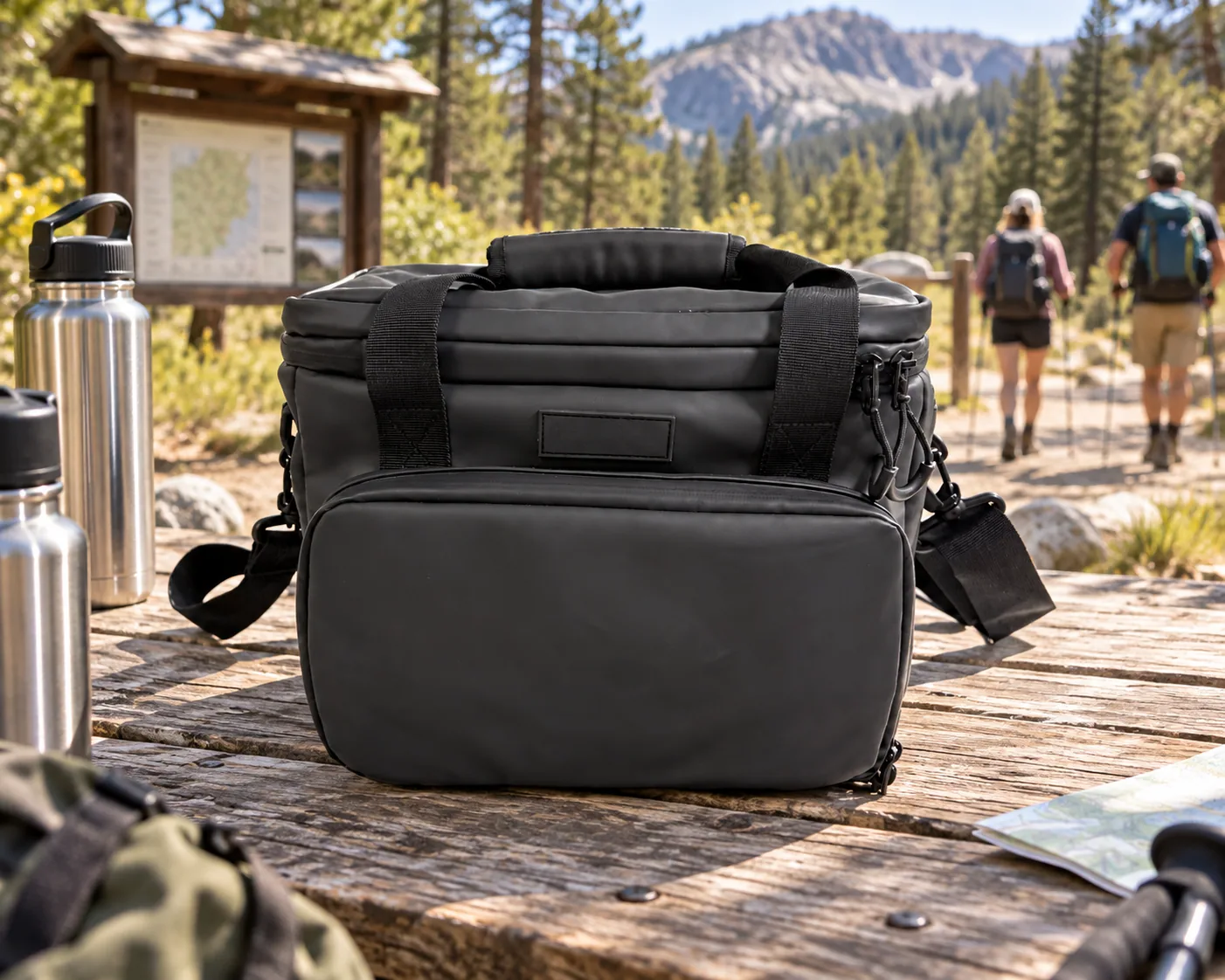
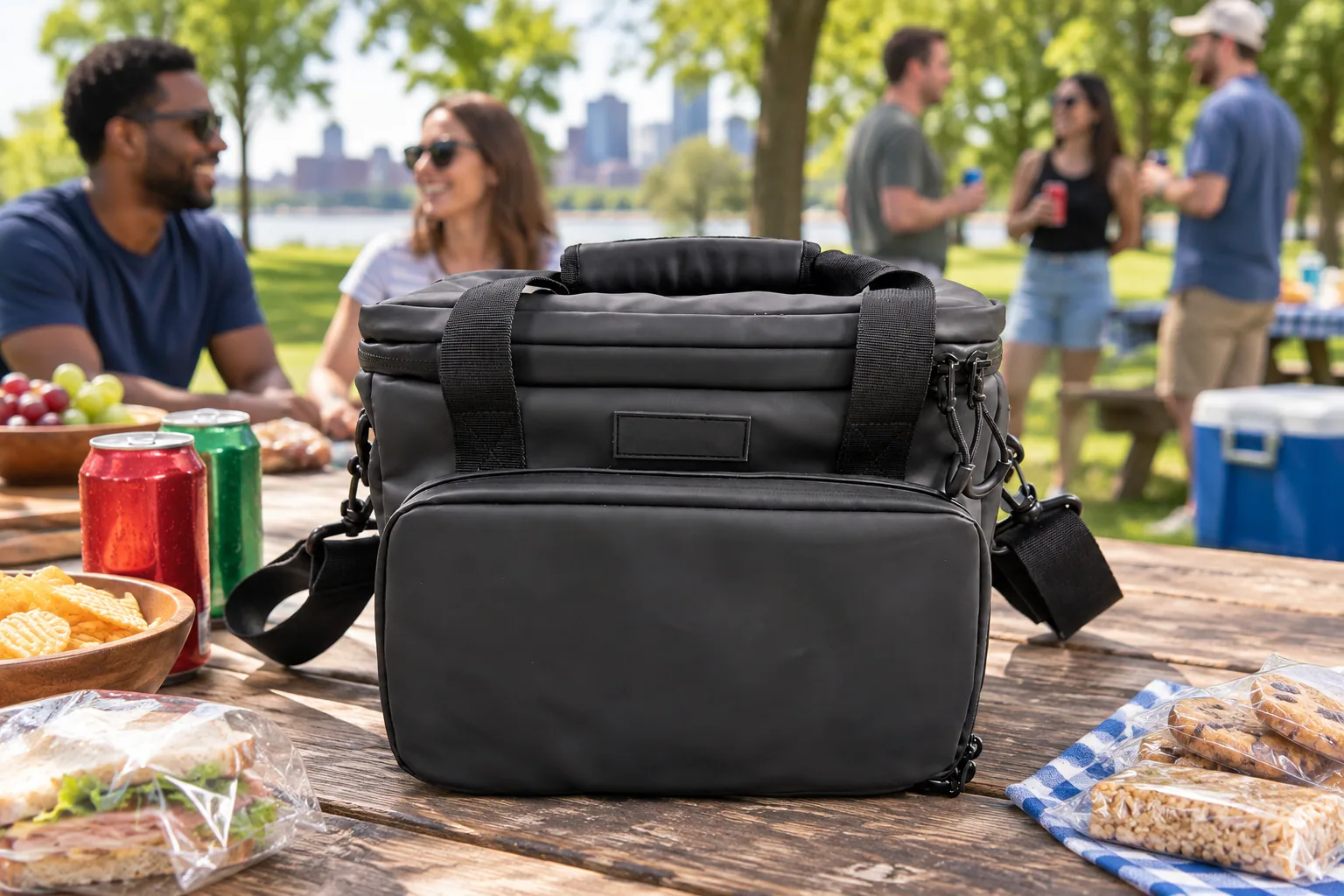
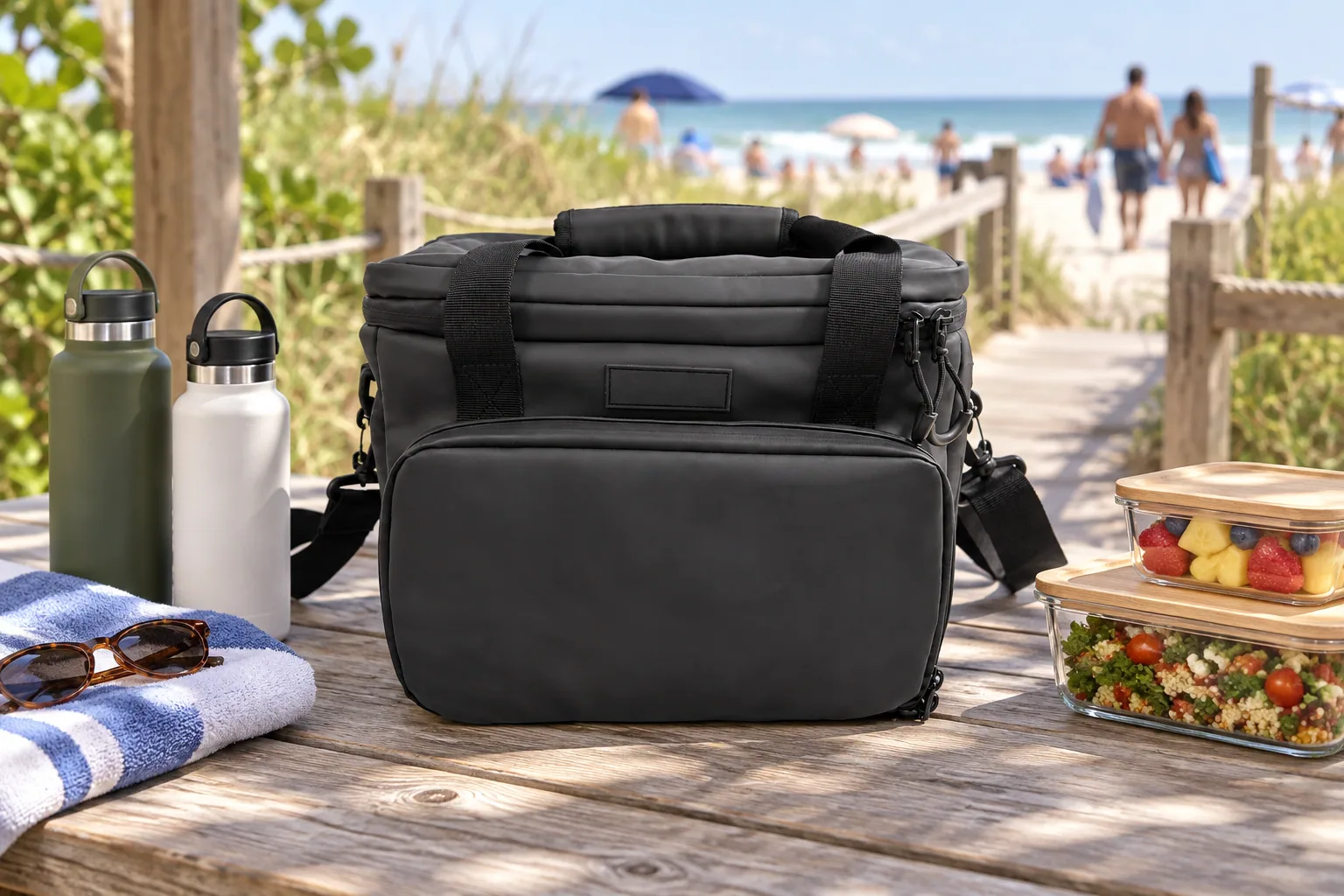
The images in this section are AI-generated use-case illustrations based on the real sample photos, not photographs of this customer's order or additional Hongzhao tests. They show how a brand might write a different approval brief for the same general bag format. Neither the illustrations nor the short case observation establish cooling duration, food-contact compliance, load capacity or weather protection.
Outdoor day trips and trailhead pickup
An outdoor brand may expect buyers to move drinks and sealed snacks from a vehicle to a trailhead table or campsite. The useful question is not just whether the bag looks rugged. Can the intended bottles, cold packs and containers fit while the zipper closes without strain? Does the shoulder strap sit comfortably during the actual walk from the vehicle, and can the user set the bag down without a buckle or loose strap dragging? A buyer should specify the carry distance, load arrangement, ground conditions and how the bag will be opened in use. This customer's brief carry photo does not establish a long-distance comfort claim.
Corporate outdoor events and team gatherings
A promotional-products buyer may care about repeated access, easy handoff between staff and a clean exterior for project-specific decoration. At a park event, a bag may be opened many times, carried between stations and set beside other supplies. Check whether the opening remains practical with the planned drink mix inside, where a requested logo would sit without crossing a seam, and whether the selected handle or strap arrangement matches the people moving it. Agree on the decoration method and sample artwork separately; these logo-removed images are not proof that every logo method is suitable.
Beach days and short leisure outings
A leisure brand may prioritize quick access, simple cleanup and carry from parking to a beach setup. The buyer's sample brief should say whether contents are sealed, whether loose ice or meltwater is expected, and how the bag will be placed on sand or a damp surface. Ask to inspect the liner, base and closure after the intended handling sequence. The ten-minute upright water observation in this article addresses only visible bottom seepage under that limited condition; it does not demonstrate protection from sand, surf, rain or a tipped bag.
Questions buyers should ask before approving a soft cooler sample
Does the 14-bottle photo establish a 14-bottle capacity claim?
It establishes that 14 bottles of the photographed type were placed in this sample. It does not establish a standardized can count, internal liters or fit for every bottle. To make a public capacity claim, define the item dimensions, whether a cold pack is included, the required closure condition and the pack-out that will be repeated on the final construction.
Does the 14.1-lb scale reading establish the bag's rated carrying load?
No. The scale image shows a combined bag-and-contents reading for this pack-out. The empty bag weight was not provided, so net payload is unknown. A brief shoulder-carry observation does not replace a buyer-defined repeated-load or durability test. State the observed reading, then agree any rating separately.
Does ten minutes without visible bottom seepage mean the bag is leakproof?
No. The reported observation concerns water standing inside one upright sample for roughly ten minutes. The amount, depth, movement and compression conditions were not documented. It says nothing conclusive about inversion, rain entering the closure, long exposure or production consistency. Define those conditions and test the final construction if the buyer needs a leakproof or waterproof claim.
Can PEVA alone guarantee food-contact compliance or water containment?
No. A material name does not establish a destination-market compliance status or the performance of the assembled liner and seams. Confirm the exact supplied material, current documents and actual construction for the project. The water observation described here is a check on one assembled sample, not a material certificate.
What should a buyer send to request a review of their own sample?
Send the intended contents and their dimensions, the way the bag will be carried, reference images or an existing sample, the destination market, any mandatory documentation and the acceptance method you need. Include the constraints that matter most: closure with contents inside, cleaning expectations, water exposure, branding, packaging and desired timing. Hongzhao can then discuss sample feasibility and a project-specific review instead of guessing from a generic product photograph. For a formal request, use Project Inquiry.
The decision worth taking away
This case is valuable precisely because its evidence is limited and visible. The sample held the photographed 14-bottle pack-out, the combined scale reading was about 14.1 lb (6.380 kg), a brief shoulder carry was reported workable, and no bottom seepage was reported during a roughly ten-minute upright water observation. That is enough to identify useful buyer questions and next tests. It is not enough to promise a load rating, cooling duration, food-contact status or universal waterproof performance.
For a brand preparing a custom cooler program, the strongest approval is a shared record: what the bag must do, what was checked, what was observed, what remains open, and which physical version everyone will build against. Bring that record to the sample discussion. It will make the next revision more specific and the production handoff less dependent on memory.