

On this page
A sports duffel that looks useful in a product photo can disappoint as soon as someone packs it. Shoes occupy the space intended for clothing. A damp towel reaches a clean layer through an open pocket. The shoulder strap works when the bag is empty but slips when the user is carrying the kit the brand actually sells it for. None of these problems is solved by adding another feature to a list. A brand buyer needs to decide what the bag must carry, how its owner will reach each item, and what a physical sample must demonstrate before it is approved.
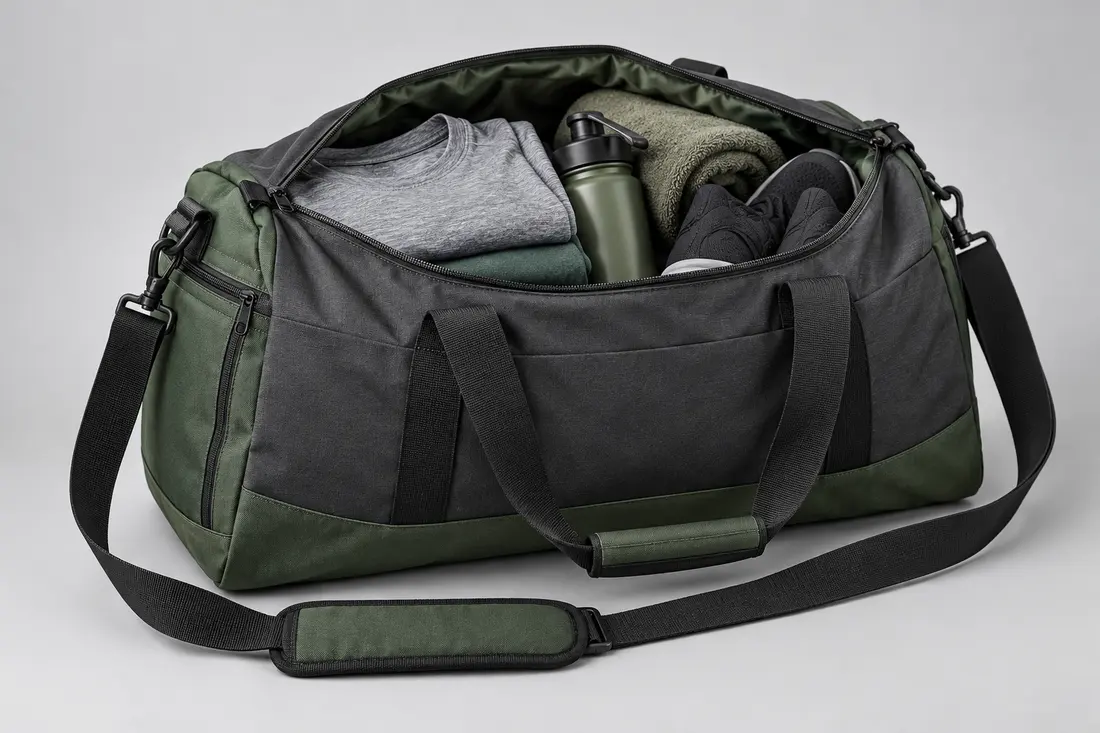
This guide is a working method for that decision. It takes an intended use, turns it into a brief, and then turns the brief into observations and an issue log. It is not a claim that a particular bag is waterproof, can carry a specified load, fits every shoe size, or has passed a test. The product views in this guide are AI-generated design concepts, not Hongzhao samples or factory evidence. For actual manufacturing options and a project-specific quote, use the Custom Sports And Duffel Bag Manufacturer For Brands And Buyers page.
Start with one user journey, not a catalog of features
Write down what a typical owner does from leaving home to unpacking the bag again. A training-club member may go from office to changing room, take out shoes first, then reach clothing and a water bottle. A team-sport participant might travel by bus, share a crowded changing area and need a visible place for small personal items. An outdoor event participant could carry a jacket and damp accessories home after a day outside. These scenes create different requirements even if all three buyers call the product a “sports duffel.”
Pick one primary scene and one or two secondary scenes. If every possible use is equally important, the bag quickly accumulates pockets, straps and dividers that compete for the same space. Ask which item must be reached without opening the main cavity, which items should never touch each other, whether the bag sits on a wet floor, and whether the buyer expects the owner to carry it by hand or over one shoulder. Those questions determine whether a compartment adds value or merely adds a zipper.
The buyer should supply a representative kit, not just a capacity adjective. Put the actual or approved reference sizes of shoes, clothing, towel, bottle, protective equipment and any electronics on a table. Photograph them together and record the intended packing order. A supplier can discuss construction options from a photo or sketch, but the buyer cannot approve real fit from a drawing alone. If the project has no physical reference kit yet, mark those dimensions as open decisions in the brief rather than silently guessing.
A decision table that the buyer can actually fill
The following table is a planning tool. Its “evidence to retain” column tells the team what to photograph or write down when a sample exists; it is not a completed inspection report or a Hongzhao product specification.
| Use scene and concern | Buyer-defined requirement | Action on a physical sample | Evidence to retain before approval |
|---|---|---|---|
| Gym-to-work: shoes near clean clothes | State the reference shoe pair and whether the shoe space may intrude into the main cavity | Pack the shoes and the full clean-clothing kit together; close and reopen the bag | Photos of both packed areas, access sequence, measured clearances and a buyer decision |
| After training: damp towel or used kit | Define what stays separate, for how long and whether a removable pouch is acceptable | Place the reference items in the proposed pocket and check contact points, cleaning access and closure | Pocket construction photos, observed contact or leakage, cleaning notes and next action |
| Team travel: fast equipment retrieval | List the first item needed at arrival and the items that can remain buried | Have a user retrieve each item in the planned order without repacking everything | Timed observations if the buyer requests them, obstructions noted and an access decision |
| Short carry from vehicle to venue | Define hand-carry and shoulder-carry situations using the planned kit | Carry the loaded sample as intended and inspect handle, strap adjustment and connection points | Photos of the loaded position, user comments and any visible movement or strain |
| Retail launch: logo and packaging | Supply approved artwork, placement and pack-out instructions | Compare a physical sample and its packed presentation with the approved reference | Marked artwork proof, placement measurements, packaging photos and sign-off version |
Notice what the table does not do: it does not insert a universal capacity, weight limit, shoe size or pass/fail number. Those belong to a specific buyer brief. If the brand needs a lab result or contractual tolerance, agree on a method and the responsible party before calling anything “tested.”
Decide where shoes belong before designing the shoe pocket
Search phrases around a gym bag with a shoe compartment suggest a visible end-user concern, but most of those searches are for finished retail bags. A manufacturer brief must go one level deeper. The buyer needs to state which shoe or pair is the reference, whether it is clean or used when packed, and whether access from the outside is more important than preserving the shape of the main compartment.
A side-entry shoe section can be convenient because shoes can be removed without lifting out clean clothing. Yet many side-entry pockets borrow volume from the main cavity. An empty bag photo hides that tradeoff. When the sample arrives, pack the shoes first, then the clothing and other essential gear. Repeat with the order reversed. Observe whether the shoe pocket presses against a bottle, creases a garment, deforms the bag, or makes the top opening hard to use. Record the difference between the bag standing on a table and being carried.
Ventilation is also a design decision, not a magic label. A mesh panel may improve airflow under some conditions, but it can also expose contents to rain or dirt. A closed lined compartment can contain loose debris but may be harder to air out. Neither construction automatically prevents odor or moisture transfer. Decide what problem the brand is solving, ask for a proposed material and opening arrangement, then inspect a sample with the reference kit. If the buyer expects a specific hygiene or performance outcome, it needs its own evidence; do not infer it from the appearance of a pocket.
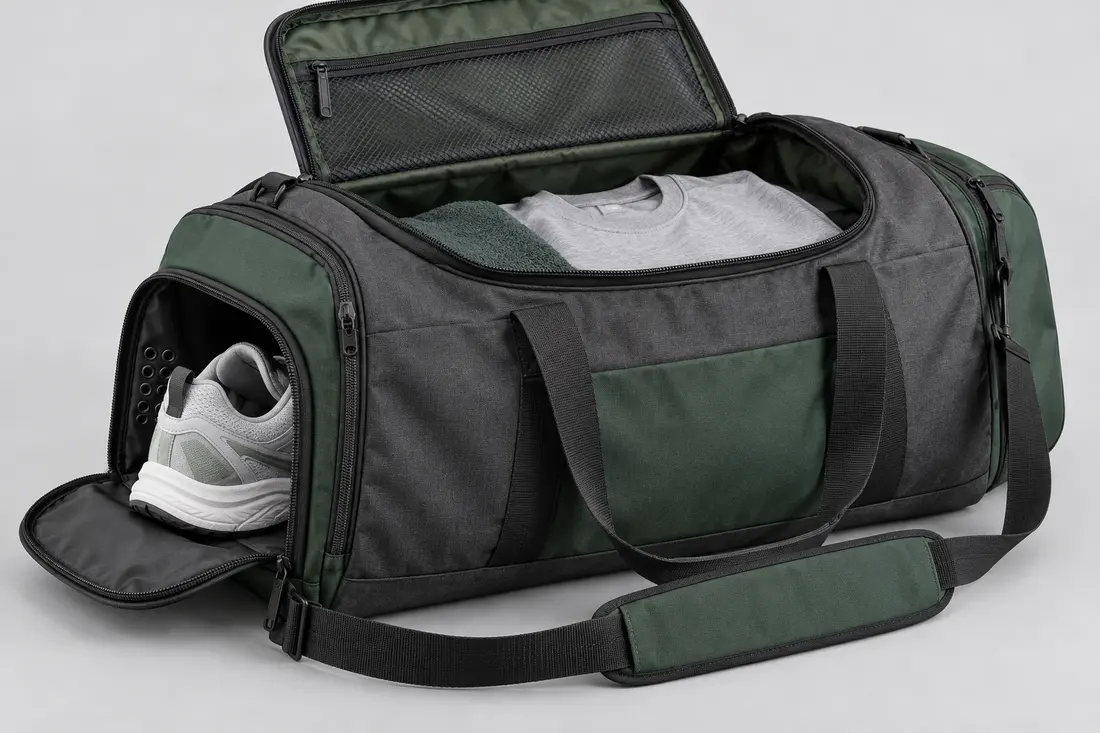
For the first sample review, note the opening dimensions, reachability of the zipper pull, whether the reference shoes can be inserted without forcing the opening, and how much usable main space remains. Take a photograph with the same shoe pair and packing list in every revision. “Shoe pocket improved” is too vague for a development record; “reference pair now inserts without moving the clean kit, but the opening still catches a lace” gives the next sample maker a decision to act on.
Treat wet gear as a handling problem, not a waterproof claim
A wet pocket is useful only when the buyer has defined what “wet” means in this product. Is the intended item a towel that is merely damp after training, a swimsuit carried home for an hour, or clothing left in the bag until the next day? These are very different exposure conditions. A lined pocket, a separate pouch and a ventilated exterior section may each be sensible, but each creates a different cleaning and leakage risk.
Draw a boundary on the brief: which contents must remain dry, which surfaces may be wiped clean, and who removes the wet item after use? If the design relies on a removable pouch, the pouch is part of the product experience and should be checked with the full packing kit. If the wet space is built into the bag, inspect the seam junctions, zipper end and any place where wet material could touch the main lining. A water-resistant fabric face does not automatically make a stitched pocket waterproof. The answer to a leakage claim would require a defined construction and test, not an adjective in marketing copy.
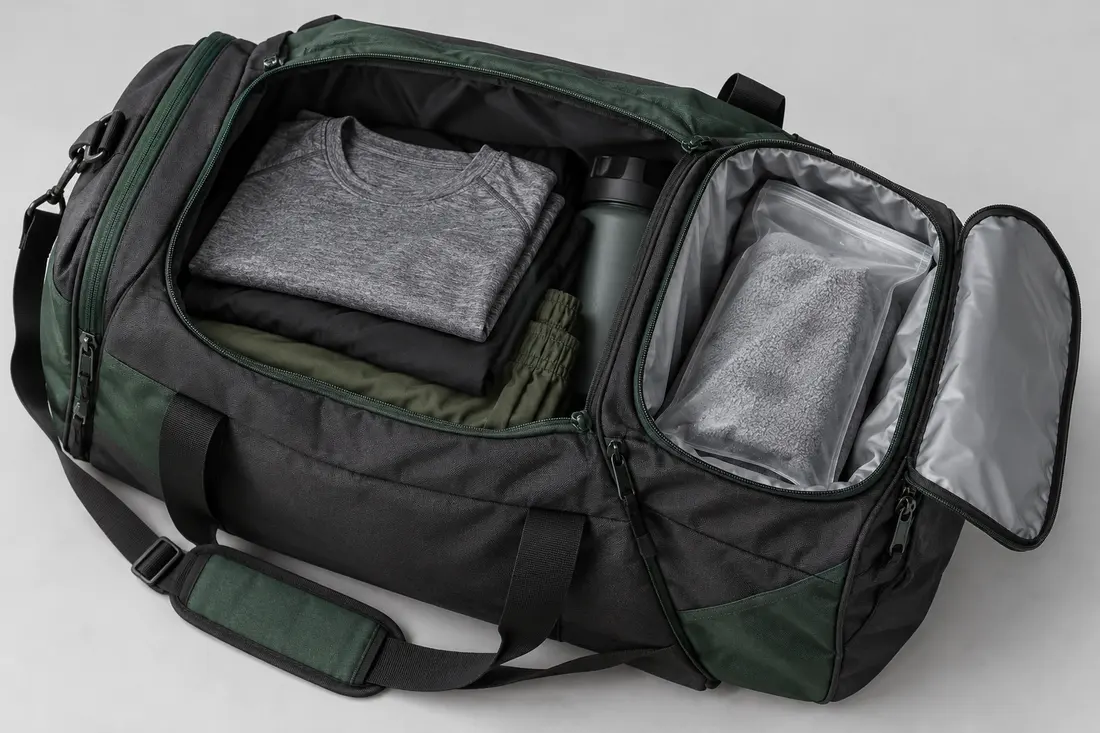
The buyer can ask the sample reviewer to place a representative damp item in the proposed location, carry the bag in the normal orientation and then inspect contact points and the cleaning process. Record the item, its condition, elapsed time and what was actually observed. Do not reuse the result as a general performance rating. If a program requires a named water-resistance level, request a project-specific test plan and results before any public claim is approved.
Keep the opening, packing order and everyday access in the same conversation
Compartments are only one part of organization. The main zipper opening, internal visibility and where the bag rests while open determine whether the owner can use the promised layout. A narrow top opening can make a large cavity feel small. A wide opening may make packing easier, but its zipper route, flap and handle placement must still work when the bag is full. A bottle pocket is not useful if it collapses against a stuffed shoe section.
Ask the brand team to walk through three actions on the sample: pack at home, retrieve one item at the venue, and repack after use. Let someone who did not design the bag perform the sequence. Watch for hands searching blindly, a zipper pull hidden behind a handle, an item that must be removed to reach another, and pockets that become inaccessible when the bag is carried. Those observations have more design value than simply counting pockets.
The pack-out should include the items a customer is likely to carry together, not the most flattering selection that fits for a photograph. A reference kit can include shoes, clothing, a towel, bottle and small personal objects where those match the approved target user. Electronics should be included only if the brand intends to market storage for them. If a laptop must be protected, make that a separate requirement with a defined reference device and protection expectation; an ordinary divider should not be described as protective padding without verification.
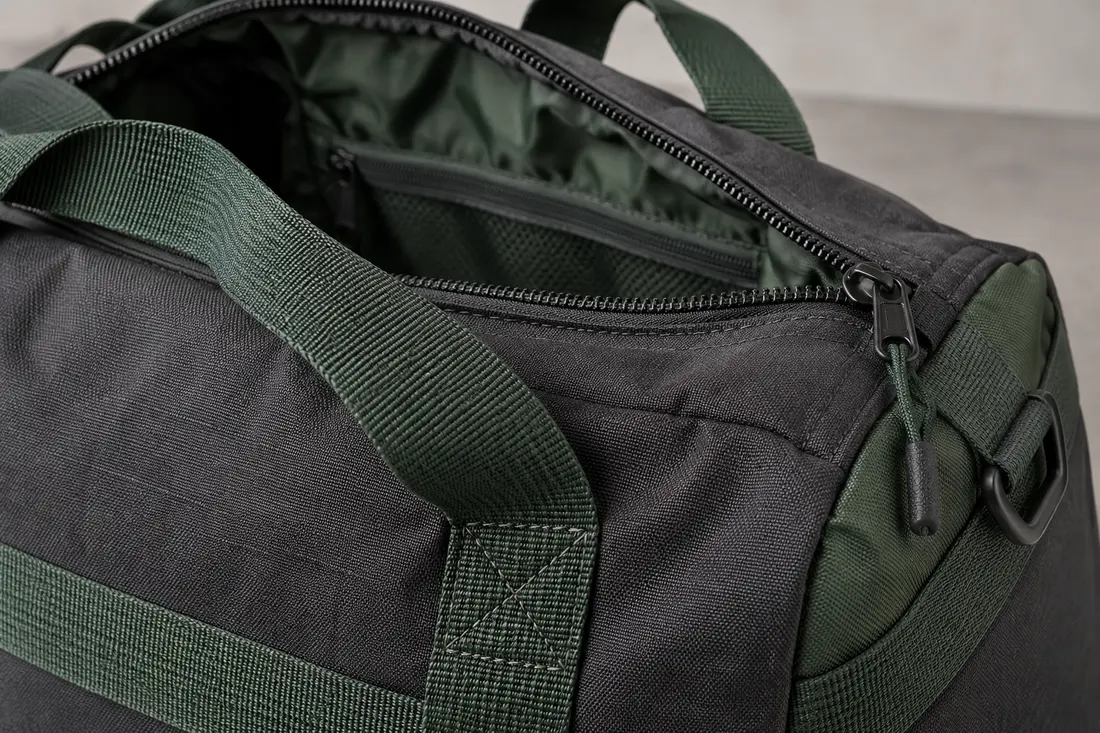
For each access issue, record the exact action that failed. “Opening is poor” invites opinion. “With the reference kit packed, the left zipper pull stops behind the handle attachment and the owner must put the bag down to open it” identifies a construction question. The revision may involve pull length, handle position, zipper path or a different packing sequence. Let the physical sample decide whether the proposed change actually works.
Choose carry options for the route the owner takes
Hand handles, a removable shoulder strap and backpack-style carrying are not interchangeable decorations. Each changes how the bag hangs, where the load is felt and how hardware connects to the shell. A buyer can ask for more than one carry mode, but it should identify the primary mode first. Carrying a bag from car to gym is different from walking across an airport or standing on public transport with it. A strap that looks comfortable on a display bag may twist or slide with the full reference kit.
Start with the user route: distance and duration are useful context, but they are not themselves performance ratings. Then specify how the user switches modes. Can a shoulder strap be removed without leaving hard hardware against clothing? Are hand handles easy to pick up when the bag is full? Does the strap adjustment remain reachable while worn? If the brief requests a backpack conversion, decide where the unused straps go and whether they interfere with the main opening. Every added mode affects pattern pieces, hardware, assembly and approval criteria.
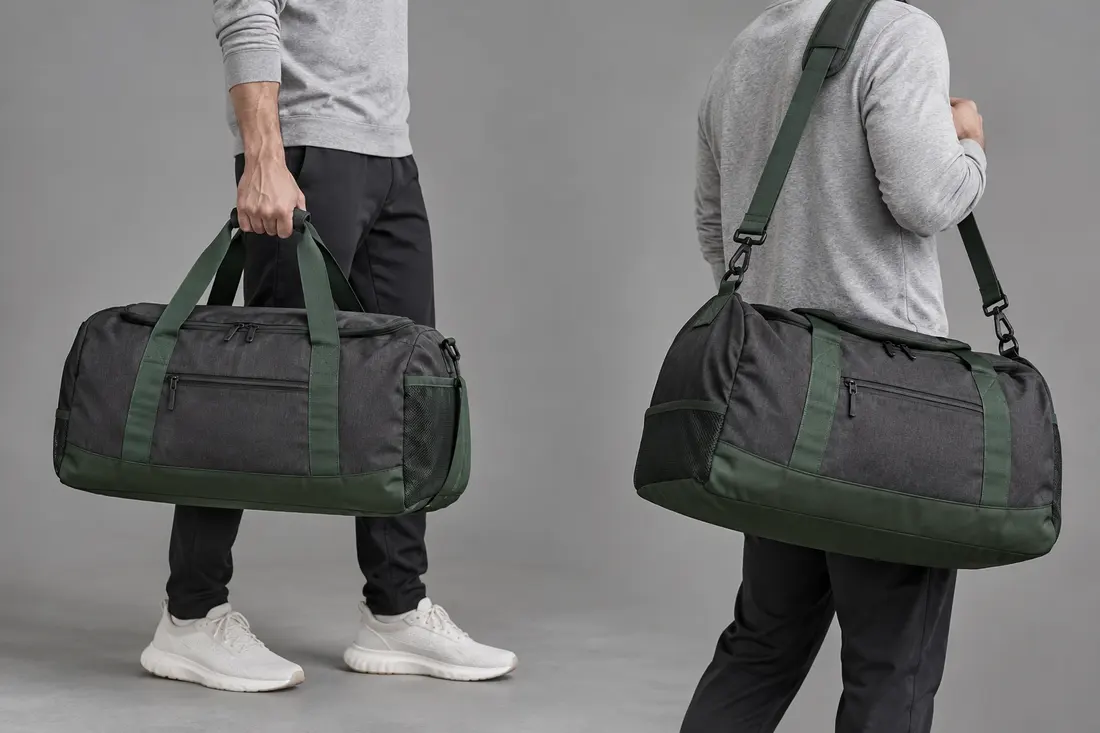
Inspect the loaded sample, not merely the strap component. Look at the handle anchor from both inside and outside, and check whether the intended kit changes the bag's balance. Record any slipping, uncomfortable edge, hardware contact or blocked access as an observation from a named reviewer under stated conditions. Do not convert a short handling review into a load rating or ergonomic certification. If the brand needs a quantified strength claim, it must define the test load, method, acceptance rule and evidence separately.
Specify material and lining by use, then send open questions to the right page
Fabric names alone do not settle the buying problem. The buyer should describe expected abrasion exposure, cleaning routine, appearance, hand feel and target price position, then request feasible material directions for its project. A coated fabric may make wiping the outside easier, while lining choice affects internal cleaning and how a pocket is sewn. Zipper, binding, thread, webbing and hardware choices are part of the finished construction, not afterthoughts. Any claimed resistance, composition or certification should be checked against the actual proposed material and supporting documentation.
The purpose of this article is to connect material choices to the sports-bag design brief, not to repeat the site's fabric comparison. For a broader explanation of available fabric directions, use Bag Materials and Fabric Options. In the sports-bag brief, ask for a material swatch or approved reference, state which component it applies to, and keep a record when a substitute is proposed. “Same look” does not guarantee identical construction or handling.
A clear handoff list can be short: outer fabric direction, lining and pocket direction, zipper and hardware appearance, webbing/handle direction, approved color reference and cleaning expectations. Mark each item as supplied by the buyer, proposed by the supplier, or still undecided. If a supplier recommends an alternative, the buyer should review the change on a physical sample or component board before it is folded into the approved specification. Project-specific material availability and minimum order requirements must be confirmed with the team; this guide does not quote a fixed number.
Turn a reference photo into a brief the factory can review
Buyers often begin with a competitor image or a mood board. Such references are useful for describing a direction, but they cannot replace a product specification and must not authorize copying a protected design or logo. State what the reference is meant to communicate: overall silhouette, opening style, visible compartment arrangement or carry mode. Then distinguish the requirements that must match the brand's plan from the details that may be redesigned. Do not ask a factory to infer material, hidden construction or internal dimensions from a single photograph.
The brief should identify the intended user, primary use scene, reference kit, target markets and sales channels. Add the planned dimensions only when the buyer has them, and say who will approve any changes. Supply the logo artwork and permitted application method if known. Note whether the product will be packed flat, filled for display or shipped with special retail packaging. Those decisions affect how a sample is reviewed and how the final approved version is reproduced.
For a practical handoff, group information into three states: confirmed, proposed for review and not yet known. Confirmed items are the baseline against which a sample can be assessed. Proposed items invite the manufacturer's feasibility response. Unknown items are not failures; they are decisions to resolve before a quotation or approval is treated as final. This prevents a friendly conversation from being mistaken for a signed specification.
Hongzhao's OEM Outdoor Bag Manufacturing Services page describes reviewing a sample, drawing or tech pack, together with material and component requirements, before production planning. A sports duffel buyer can use this article to prepare those inputs. It should still confirm actual options, availability, price and schedule with the project team rather than assuming every feature in a concept image is offered as a standard item.
Review the physical sample with a versioned issue log
A sample review is useful only when the team can identify which version was checked and what changed. Start with a sample ID or revision, review date, reviewer, reference kit and the latest confirmed brief. Photograph the outside and the packed inside from repeatable angles. Have the reviewer perform the planned actions: insert shoes, place a damp-item reference in the intended location, retrieve the first-use item, carry the loaded bag and repack it. Note what the reviewer actually saw or felt. Keep opinion separate from observation.
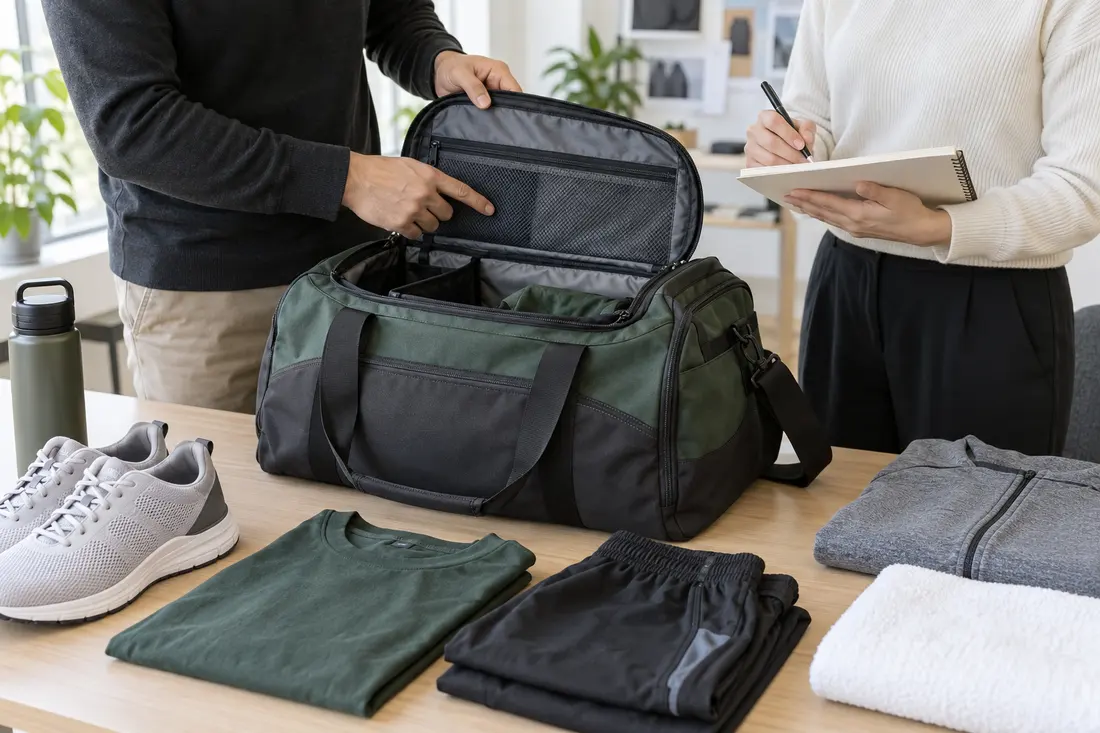
An issue log can be compact enough to use during a real meeting:
| Sample version and location | Expected behavior from the brief | Observed result with reference kit | Buyer decision and owner | Evidence and recheck |
|---|---|---|---|---|
| Version to record; shoe opening | Reference shoes insert without disturbing clean clothing | To be observed on the physical sample | Accept, revise or defer; assign an owner | Photo of shoes in place and packed main cavity; repeat next version |
| Version to record; wet-item pocket | Damp item stays in the defined separate area for the defined use | To be observed; no waterproof result assumed | Agree the construction question and reviewer | Photo of seams and contact points; record item condition and elapsed time |
| Version to record; handles and strap | Intended carrying mode remains usable with the approved kit | To be observed by identified reviewers | Decide whether construction changes are needed | Loaded carry photos, reviewer comments and follow-up check |
| Version to record; logo and packing | Placement and pack-out match approved artwork and packing instructions | To be checked against buyer files | Approve or correct before production reference is frozen | Signed artwork proof and pack-out photos |
The blank cells are deliberate. They belong to the real project, not to an article writer. Each issue should have an owner and a next action: correct the sample, change the brief, obtain missing evidence, or accept the difference knowingly. When a revision arrives, compare it with the same reference kit and the same acceptance question. If the kit, target user or planned use changes, note that the review conditions changed too; otherwise the versions are not comparable.
Before approval, identify the exact reference sample and document set that will govern the next stage. Ask what material, color, component and logo substitutions would require another approval. A photograph alone may not show stitch construction, zipper feel or lining behavior. A signed checklist without a physical reference may leave people arguing about what “same as sample” means. Use both when the program warrants it, and retain the version history for the buyer and manufacturing team.
Why involve a factory before the brief feels perfect?
The point of an early factory conversation is not to claim that every requested construction is already proven. It is to expose feasibility questions while the buyer can still change the design. A compartment may require a different pattern piece; a logo treatment may interact with a pocket seam; a chosen lining may change how a wet-item section is assembled. Asking for a feasibility review before final artwork or packaging is locked can save the team from approving a design that depends on an unresolved assumption.
Hongzhao publicly describes sports and duffel OEM/ODM projects that begin with a buyer's reference, intended use, compartment layout, material direction, logo method and packaging requirements. Its Outdoor Bag Quality Control Process describes material, in-process and final inspection checkpoints. Those pages explain the kind of project discussion a buyer can start; they do not certify that the hypothetical product pictured here has passed inspection. The practical advantage for a buyer is the opportunity to make decisions visible and reviewable before treating a concept as a production instruction. The actual project scope and evidence must be confirmed by the Hongzhao team.
This distinction matters for a new brand as much as an established one. A buyer with only a sketch can say which scenes and items are non-negotiable, then ask for a proposed construction to evaluate. A buyer with a full tech pack can use the same review table to compare the first physical sample with its own specification. In either case, the approval standard comes from agreed requirements and observed evidence, not a generic promise about “premium quality.”
Questions a buyer should settle before requesting a quote
Do we need both a shoe compartment and a wet-item pocket?
Only if the intended user and reference kit justify both. They occupy space and add openings and seams. Pack a proposed sample with the full kit, check access and cleaning, then decide whether two separate sections are worthwhile or whether a removable pouch is better for the planned use. The choice should be recorded in the brief, not copied from a retail trend.
Can we call a wet pocket waterproof?
Not from its appearance or the fabric name alone. The buyer must define the intended exposure, construction and test method, obtain the relevant result and approve exact claim wording. A pocket intended to separate damp clothing is not automatically a sealed waterproof compartment. The article and its AI concept images make no waterproof claim.
How do we judge whether a carry strap is strong enough?
First define the reference kit and planned carry modes. Inspect a loaded physical sample for usability and visible workmanship. If the brand needs a quantified load or durability statement, agree on the method, conditions and acceptance limit, then obtain the corresponding test record. An informal handling check is useful development feedback, not a certified strength result.
What should we send if our design is not finished?
Send the intended use, reference photos with permission to use them, the items and approximate sizes the owner must carry, desired logo direction, target market and the questions you cannot yet answer. Label dimensions or materials that are provisional. Hongzhao can review the project direction, but exact feasibility, materials, minimum order quantity, quotation and timing need project-specific confirmation.
When is the sample truly approved?
When the buyer has identified the version, reviewed it under the agreed conditions, closed or knowingly accepted open issues, and confirmed the materials, construction, logo and packing references that matter to the order. Record who approved it and which files or physical sample form the reference. A pleasant meeting or a promising photograph is not a substitute for a traceable approval decision.
Send a better project inquiry
If you are planning a branded outdoor or sports duffel, assemble the use scene, reference kit, priority compartments, carry mode, logo direction and open questions before you ask for a quote. You do not need to invent every technical detail. You do need to tell the project team which decisions affect the buyer experience and what the sample must show. For a project-specific review, use the Project Inquiry form and link your brief or reference materials. Ask Hongzhao to confirm available construction options, actual minimum order requirements and the evidence needed for your claims before you approve a sample or make a promise to your customers.
Further Reading
Related Products